
 °C
°C
 9
Min
9
Min
President Donald Trump is going ahead with new double-digit tariffs on dozens of U.S. trading partners just as the clock runs out Friday on stopgap levies he imposed after a stinging defeat at the Supreme Court.
The Latest: Trump imposes double-digit tariffs on dozens of countries
President Donald Trump is going ahead with new double-digit tariffs on dozens of U.S. trading partners just as the clock runs out Friday on stopgap levies he imposed after a stinging defeat at the Supreme Court.
Also, a series of explosions sounded near a military base hosting U.S. forces in northern Iraq and sirens rang out in Bahrain on Friday, hours after the American military said it finished its 13th night of strikes against Iran. The conflict has flared again over the past week, as the U.S. has pounded Iran while Tehran has attacked ships in the Strait of Hormuz and targeted U.S. assets and allies in the region.
Here's the latest:
On social media, Trump says he's OK with Canada's decision "considering they are paying substantial TARIFFS to the United States."
Canada alone is celebrating the completion of a new bridge to the U.S. over the Detroit River. The multibillion-dollar Gordie Howe International Bridge will serve as a critical path for trade and casual travel between the U.S. and Canada.
Canada scratched a joint gathering after Trump this week suddenly announced 50% tariffs on Canadian goods entering the U.S.
The president says he's opening the formal investigation because the bloc has unfairly levied billions of dollars of fines against Google, Apple and other U.S. companies.
Trump made the announcement a day after the EU hit Google with a fine of 890 million euros ($1 billion) after it said the technology behemoth broke digital antitrust regulations by setting up Google Play and its ubiquitous search engine to corral consumers toward its own services and apps to the detriment of competitors.
In a lengthy post on social media, Trump said he has warned the EU about its practice of fining U.S. tech companies. He named Google, Apple, Meta, Amazon and others.
The decision most likely cements a dramatic break from decades of tradition by keeping Iowa and New Hampshire off the top of the calendar and elevating more racially diverse states.
The Democratic National Committee's Rules and Bylaws Committee weighed competing bids led by South Carolina and Nevada for the first spot. The choice will need to be approved by the full Democratic National Committee, which is scheduled to meet in August.
South Carolina or Nevada had been expected to go first, with each state aggressively campaigning for the coveted spot.
U.S. embassies across the Middle East sent out country-specific travel alerts to Americans, advising them that already limited options to leave the region may become more limited due to escalating tensions between the United States and Iran.
At least 11 embassies in the Mideast released advisories that echo broader "worldwide caution" and regional warnings that the State Department has put out since last weekend. The department was criticized for its messaging to Americans in the Middle East before and during the war that began in late February.
Neither the worldwide alerts nor the country-specific ones being released on Friday say that intensified hostilities are imminent but they note that some airlines have already canceled flights into the region and that others may follow suit.
The 11 embassies to issue the alerts are Bahrain, the virtual embassy in Iran, Iraq, Israel, Jordan, Kuwait, Lebanon, Oman, Qatar, Saudi Arabia and the United Arab Emirates.
Israeli Prime Minister Benjamin Netanyahu plans to travel to the United States for an official visit next week, his office said in a statement Friday. He'll meet with President Trump in Washington on Tuesday, according to the statement, and also attend the funeral of Sen. Lindsey Graham.
The last time the two leaders met in Washington was in February, just weeks before they launched a joint war against Iran. Since then, tensions have grown between the longtime allies, including over how to prosecute the war.
Israel had opposed Trump's recent negotiations with Iran, while Trump was upset over Israeli military action in Lebanon, which he saw as a threat to his diplomatic efforts to reopen the Strait of Hormuz.
But with Iran and the United State fighting once again, Israel has also signaled its willingness to rejoin the conflict. In recent days, Israeli officials have said they're preparing to respond if Iran launches an attack on Israeli soil.
Vance added a message with her social media post thanking the public "for all the good wishes as we settle into life as a family of six."
She included photos of her larger family seated on a couch, as well as a close-up of the baby.
Vance gave birth Sunday to Alec Neel Vance, her fourth child with Vice President JD Vance. Alec is also the first child born to a sitting vice president in more than 150 years.
He joins older siblings Ewan, Vivek and Mirabel.
When guests arrive for the rescheduled White House Correspondents' Association dinner Friday at Washington's Waldorf Astoria hotel, security will be much tighter, the guest list smaller, the partying pared down.
That much, the correspondents' association can control.
What remains out of its control - and perhaps the biggest question - is what the dinner's most prominent guest, President Donald Trump, will bring to the table.
Call it White House Dinner 2.0, or Take Two, or, in Trump's own words, a "HOT ticket."
The big unknown is whether Trump will bring the fighting words ("rather nasty," he said) against the press he'd planned to deliver in April - before the event descended into chaos when a gunman stormed a security checkpoint, forcing an evacuation of the room.
Wendy Cutler, a former senior U.S. trade official, said the latest round of tariffs involved "few surprises" since they range just between 10% and 12.5%.
The U.S. Trade Representative's office spent four months investigating the basis for those tariffs to meet legal requirements under Section 301 of the U.S. Trade Act of 1974.
"Time will tell whether the third attempt to impose tariffs is the charm and this action stands up to legal challenges," said Cutler, senior vice president of the Asia Society Policy Institute.
These duties are less likely than earlier ones to be overruled by U.S. courts, she said.
Further tariffs may be coming in the fall related to alleged structural excess capacity of trading partners, she noted.
China's Ministry of Foreign Affairs said it "opposes all forms of unilateral tariffs" in response to the new 12.5% tariffs, reiterating a longstanding statement by Beijing.
"Tariff wars and trade wars do not serve any parties' interests," ministry spokesperson Lin Jian told a regular news conference.
Trade tensions have clouded relations between China and the U.S., two of the world's biggest economies, as Trump's hefty "Liberation Day" tariffs resulted in a sharp drop in Chinese exports to the U.S.
Trump and Chinese leader Xi Jinping, who agreed to set up new boards of trade and investment at their mid-May meeting in Beijing, are expected to meet again in September.
Trump's latest set of tariff hikes drew objections Friday from America's trading partners including China and Japan, with Australia's trade minister slamming them as "completely unjustified."
The administration announced extra tariffs of 10% to 12.5% on 60 economies late Thursday, saying the countries had failed to adequately enforce a ban on goods made with forced labor.
Australian Trade Minister Don Farrell rejected claims linking Australia, a major exporter of beef, gold and copper, to modern slavery.
"We believe that amongst all of the countries in the world Australia does take the issue of slavery, modern slavery, seriously, and will continue to do that," Farrell told reporters in Adelaide.
Japan also protested the 12.5% tariff imposed on its exports, noting Tokyo had been reassured by the Trump administration that there would be no more tariffs on top of an earlier agreement on a 10% U.S. import duty.
Hundreds of former or retired journalists and eight press freedom groups are asking the White House Correspondents' Association to stand up to the Trump administration's recent attacks on the media at its rescheduled dinner this week - a dinner President Donald Trump says he'll attend.
The first dinner was cut short in April when a gunman, who prosecutors say was trying to assassinate Trump, opened fire at the Washington Hilton. The much smaller rescheduled dinner will take place Friday, with enhanced security precautions, at the capital's Waldorf Astoria Hotel, formerly the Trump International Hotel.
The letter expands on a similar one issued in April, before the first dinner. It notes that since then, "the administration's attacks on journalists and press freedom have become even more egregious."
The letter, organized by former ABC News correspondent Lisa Stark and producer Ian Cameron, cites in particular the recent subpoenas by the Justice Department to New York Times journalists who reported on security concerns over the president's Qatari-gifted Air Force One jet. Additional subpoenas of the journalists' phone records have included even the mother of one reporter and two spouses.
A series of explosions sounded near a military base hosting U.S. forces in northern Iraq and sirens rang out in Bahrain on Friday, hours after the American military said it finished its 13th night of strikes against Iran.
The conflict has flared again over the past week, as the U.S. has pounded Iran while Tehran has attacked ships in the Strait of Hormuz and targeted U.S. assets and allies in the region.
The strait, which is a crucial passage for the world's energy supplies, is at the center of the latest fighting since Iranian attacks can effectively shut the waterway, sending fuel prices soaring worldwide and causing widespread economic turmoil. The Iranian-allied Houthi rebels added further pressure this week by targeting two Saudi tankers in the Red Sea, making good on a threat to cut off an alternative route for the region's oil.
Despite the unpopularity of the war in the U.S. and the widespread damage it has caused in Iran and to the global economy, the latest round of fighting has no clear off-ramp.
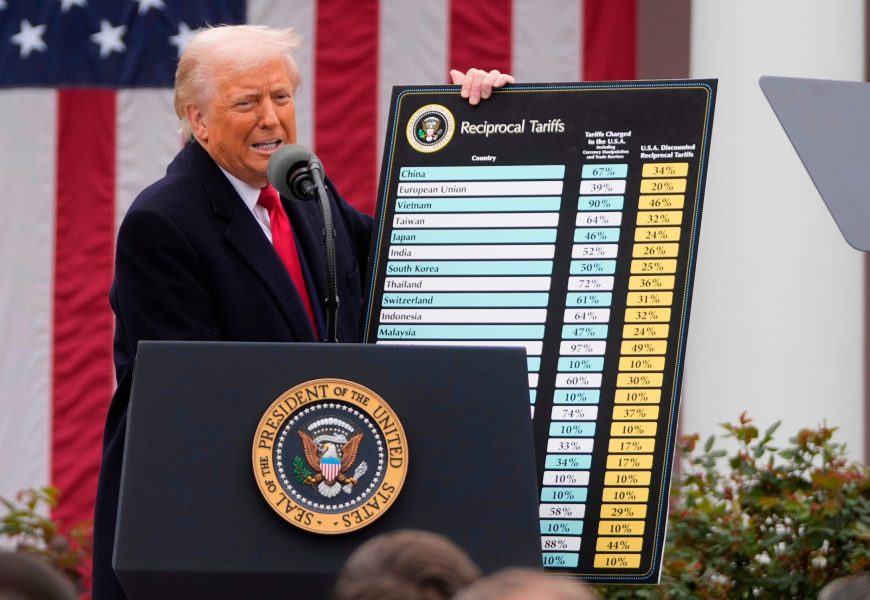
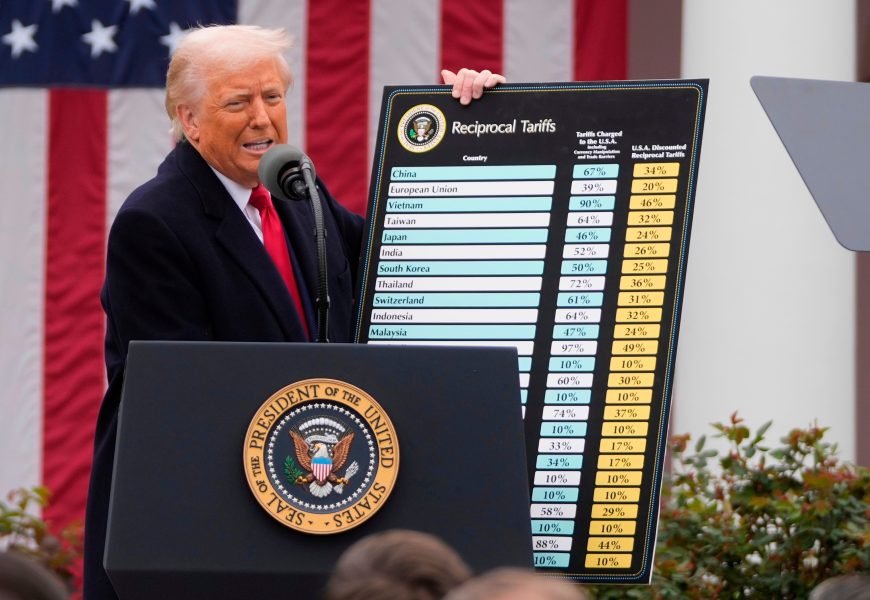
President Donald Trump is going ahead with new double-digit tariffs on dozens of U.S. trading partners just as the clock runs out Friday on stopgap levies he imposed after a stinging defeat at the Supreme Court.
The United States will slap taxes of 10% to 12.5% on imports from 60 trading partners accounting for 99% of U.S. imports, charging that they have inadequately enforced bans on goods produced by forced labor.
"The United States has had a forced labor import ban for nearly a century, and rigorously enforces it; it's well past time for our trading partners to do the same," said U.S. Trade Representative Jamieson Greer.
The new tariffs will take effect just as temporary 10% worldwide tariffs expire at 12:01 a.m. Friday. Trump had turned to those temporary levies after the Supreme Court struck down his biggest and boldest tariffs in February.
More Top Stories