
 °C
°C
 3
Min
3
Min
CAIRO (AP) – The leader of Iran-backed Houthi rebels in Yemen said Thursday that his group was ready to escalate its conflict with Saudi Arabia, after the two sides exchanged strikes on each other’s airports.
Iran-backed Houthi leader in Yemen threatens escalation with Saudi Arabia
CAIRO (AP) - The leader of Iran-backed Houthi rebels in Yemen said Thursday that his group was ready to escalate its conflict with Saudi Arabia, after the two sides exchanged strikes on each other's airports.
In the most significant confrontation since a 2022 truce, Saudi warplanes struck Sanaa International Airport on Sunday. In response, the Houthis launched missiles and drones at Saudi Arabia's Abha International Airport on Monday. There were no casualties reported.
Tensions flared earlier this month when the Houthis accused Saudi Arabia of trying to prevent the return of an Iranian plane carrying a Houthi delegation to Tehran for the funeral of Iran's Supreme Leader Ayatollah Ali Khamenei. The plane was diverted after the Sanaa airport was bombed and landed safely in the city of Hodeida. Saudi officials did not respond to a request for comment about the airstrikes in Yemen.
Houthi leader Abdul Malik al-Houthi said the group's response to the strike on Sanaa airport was "modest" and that the "real equation would be Sanaa airport for Riyadh airport. The equation is airports for airports, ports for ports, and siege for siege." He also threatened oil facilities in Saudi Arabia.
He accused Saudi Arabia of failing to commit to de-escalation in Yemen after the 2022 truce.
"If the Saudi enemy moves toward a full-scale escalation, we will move toward a full-scale escalation," he said during a televised address. He said Saudi Arabia had tightened its air, land and sea blockade of Yemen, saying the kingdom was disregarding the humanitarian needs of Yemenis.
A Saudi-led coalition imposed an air and sea blockade on Yemen in 2015, as part of its war efforts to dislodge the Houthis and reinstate the internationally recognized government. That year, the United Nations established a mechanism to inspect and verify that vessels heading to Yemeni ports don't carry weapons.
The blockade has, however, resulted in crippling restrictions on the flow of commercial goods and humanitarian aid into the country, which has been one of the world's worst humanitarian crises.
Al-Houthi also said that the U.S., Israel and the U.K. had all failed in their direct confrontations with the Yemenis.
"But there is a possibility of renewed confrontations," he said. "It doesn't mean that everything has ended."
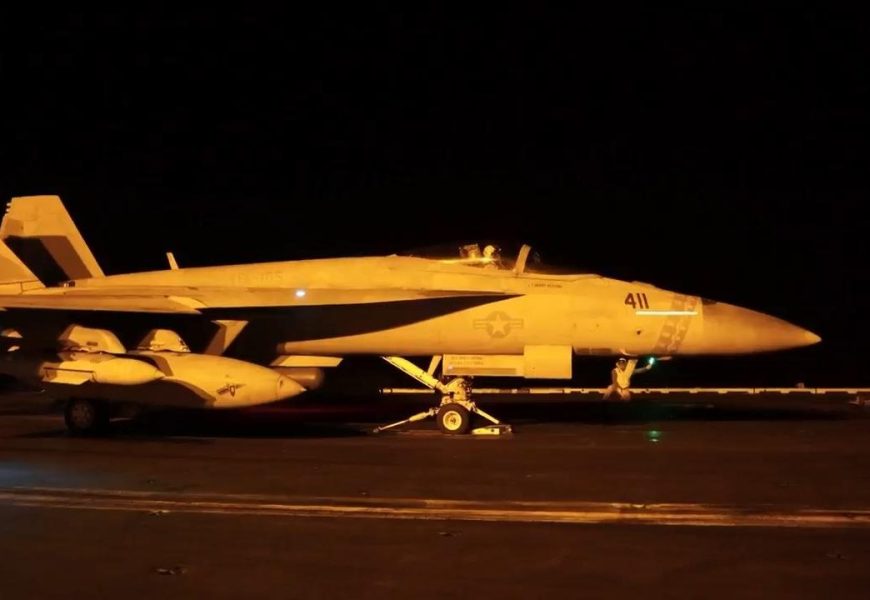
During the Israel-Hamas war, the Houthis attacked over 100 merchant vessels with missiles and drones, sinking two and killing four sailors, from November 2023 until January 2025, and also launched projectiles at Israel. The attacks disrupted shipping through the Red Sea corridor, through which $1 trillion of goods moves annually. The U.S. and Israel responded with an air campaign across Houthi-held areas in Yemen until a deal between the Americans and the Houthis in 2025.
Fears have grown that the Houthis may enter the U.S.-Iran war in support of Tehran.
More Top Stories