
 °C
 8
Min
Prime Minister Narendra Modi's Bharatiya Janata Party (BJP) has suffered an unexpected political setback in Bihar, raising questions about whether a growing youth movement could force India's ruling party to rethink how it approaches dissent, young voters and its broader political strategy. On August 4, the BJP lost the Bankipur constituency in Patna.
Will India's 'Cockroach' Movement Force Modi's BJP to Rethink Its Politics?

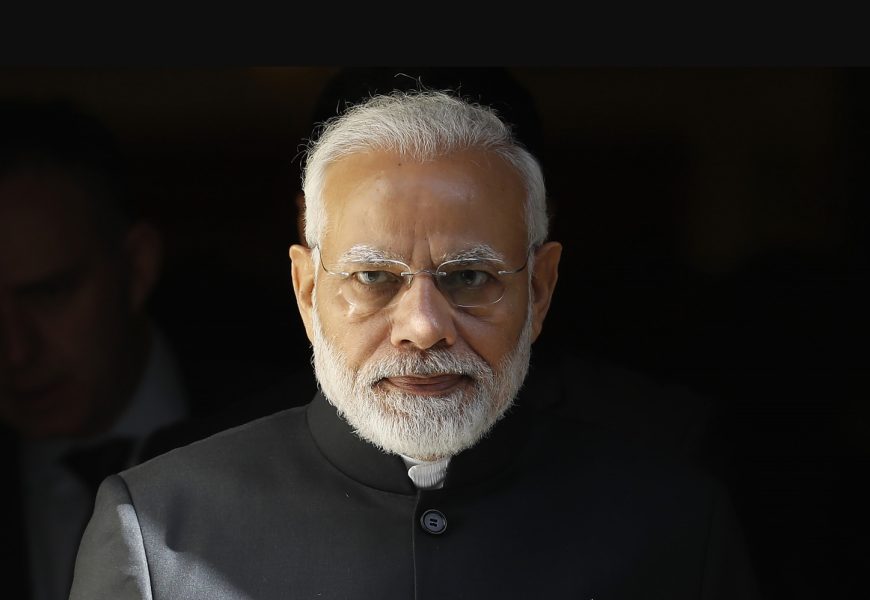
Prime Minister Narendra Modi's Bharatiya Janata Party (BJP) has suffered an unexpected political setback in Bihar, raising questions about whether a growing youth movement could force India's ruling party to rethink how it approaches dissent, young voters and its broader political strategy.
On August 4, the BJP lost the Bankipur constituency in Patna, a seat it had controlled for about three decades. The defeat was particularly striking because the constituency had previously been represented by Nitin Nabin, the BJP's national president, until only a few months earlier.
The seat was won by the relatively new Jan Suraaj Party, led by former political strategist Prashant Kishor.
The result came shortly after Education Minister Dharmendra Pradhan resigned following seven weeks of student-led protests over examination paper leaks and other grievances. The demonstrations began in New Delhi before spreading to other parts of the country.
At the centre of the protests was the satirical Cockroach Janta Party (CJP), an Instagram-based movement created in May after Chief Justice Surya Kant compared unemployed young Indians with "cockroaches" and "parasites".
The movement quickly turned the insult into a political symbol and helped mobilise a wider generation of young Indians.
During the Bankipur campaign, Nabin attacked the protesters, describing Gen Z activists as a "virus and a cockroach gang" seeking to undermine the country.
The BJP's subsequent defeat in the constituency gave the movement a symbolic victory and prompted a broader debate about whether the party's traditionally formidable political machinery is losing its ability to connect with younger voters.
BJP turns to social media
One of the clearest indications that the BJP regards the youth movement as a serious political challenge has been its increasingly visible attempt to engage Gen Z through social media.
During the protests, Modi released a series of informal, selfie-style videos on Instagram addressing concerns about examination leaks. He reportedly encouraged ministers to engage young people through social media reels rather than conventional media appearances.
In Uttar Pradesh, the BJP has introduced a youth outreach programme involving civil administration officials visiting schools to provide career counselling.
The party has also produced videos featuring young people using internet slang while discussing the government's development record with an older trainer. The campaign was widely mocked online, with some users suggesting the material appeared artificial and overly scripted.
Another Modi video briefly disappeared from Facebook, prompting India's parliamentary information technology committee to demand an explanation from Meta chief executive Mark Zuckerberg.
Political analyst Asim Ali said the BJP's difficulties on platforms such as Instagram highlight a changing communications environment.
The party previously succeeded in creating political narratives that supporters spread organically, he said. Increasingly, however, its social media messaging appears more centrally managed.
"The party's communications machinery remains powerful," Ali said, while arguing that it has struggled to reproduce on Instagram the emotional connection it once generated among supporters through platforms such as Facebook and WhatsApp.
Gilles Verniers, a researcher at Sciences Po's Center for International Studies, said the BJP's recent youth campaign appeared to be more about managing public perception than changing policy.
The appointment of a new education minister, he argued, did not represent a fundamental change in the government's approach.
A different kind of protest movement
The Gen Z protests also presented the BJP with a challenge that differed from some of the major demonstrations it had faced in the past.
During the protests against India's Citizenship Amendment Act in 2019 and 2020, and during the farmers' demonstrations, the government frequently portrayed protesters as anti-national, foreign-backed or extremist.
That strategy proved harder to apply to the latest movement.
The Gen Z protests were deliberately broad and politically diverse. They could not easily be associated with a particular religion, caste or community. Young people from groups traditionally regarded as part of the BJP's Hindu support base also participated.
Verniers described it as a movement that cut across caste divisions.
The protests also challenged the perception that Modi naturally commands the loyalty of younger Indians.
At 75, the prime minister, Verniers argued, had been recast in the public imagination as an older political figure struggling to understand the culture and language of a younger generation.
That shift in perception could prove more significant than the immediate electoral results.
What do the election results show?
The BJP lost two of three by-elections held during the first week of August, including Bankipur in Bihar and Datia in Madhya Pradesh. It retained Manjalpur in Gujarat, Modi's home state, by a comfortable margin.
Opposition politicians quickly linked the defeats to the student movement. Analysts, however, urged caution.
Ali warned that the Bankipur result should not be interpreted as definitive evidence of a national political shift.
Verniers noted that by-elections involve relatively small portions of the electorate and argued that the BJP has repeatedly demonstrated an ability to recover from political setbacks.
He pointed to Haryana, where the BJP subsequently won a majority after farmers had conducted a prolonged campaign against controversial agricultural laws.
The significance of the recent defeats, he suggested, lies less in the number of seats lost than in the emerging narrative surrounding them.
The BJP remains electorally powerful, but its relationship with sections of the public may be changing.
Protest grows beyond students
Pushpendra Saroj, a 27-year-old Samajwadi Party member of parliament from Uttar Pradesh, was among the opposition politicians who repeatedly visited Jantar Mantar, the centre of the protests in New Delhi.
He witnessed the demonstrations grow from several hundred people into thousands following the hospitalisation of activist Sonam Wangchuk after a 20-day hunger strike.
Saroj attributed the growth partly to what protesters viewed as an increasingly aggressive government response, including alleged disruptions to electricity and water supplies and a July 20 baton charge.
The demonstrations eventually attracted people beyond university students, including military veterans and serving police officers.
Saroj said the government's position changed only after criticism began reaching Modi directly.
He also believed the treatment of young protesters generated public sympathy.
"Nobody likes to see children getting beaten up," he said.
Protesters say anger runs deeper
For many participants, however, the movement was never simply about examination leaks or the resignation of the education minister.
Anjali, a postgraduate student and secretary of the All India Students' Association at the University of Delhi, said the demonstrations reflected years of accumulated frustration among young Indians.
She argued that concerns about unemployment, communalism, caste discrimination and women's rights had been building for more than a decade.
The resignation of one minister, she said, therefore represented only a small part of a much larger struggle.
Anjali also accused authorities of disproportionately targeting Muslim and Dalit students through arrests, intimidation and police complaints.
She pointed to the treatment of activists and young people in several parts of the country as evidence that the government continued to respond forcefully to dissent.
Will the CJP enter politics?
Despite its growing visibility, the Cockroach Janta Party appears unlikely to transform itself into a conventional electoral organisation.
Ali, Verniers and Anjali all suggested that the movement's decision to remain outside formal electoral politics could be strategically sensible.
Verniers pointed to the experience of the Aam Aadmi Party, which emerged from an anti-corruption protest movement and successfully entered electoral politics but has since faced growing disappointment and declining support in some areas.
Building a national political party requires substantial funding, organisational infrastructure and thousands of committed activists - resources that a loosely organised youth movement may not possess.
Instead, the CJP could exert influence by pushing established opposition parties to adopt issues raised by young protesters.
That would allow the movement to operate as a pressure group without becoming absorbed into the traditional political system.
The All India Students' Association is similarly planning to continue campaigning on university campuses rather than treating the education minister's resignation as the end of the movement.
Power versus legitimacy
Despite the political symbolism of the recent setbacks, there is little evidence that the BJP is preparing to abandon its Hindu nationalist ideology, or Hindutva.
Ali said he expected the party to continue emphasising religious identity rather than significantly shifting its political focus towards employment and education.
The BJP remains one of India's most powerful political organisations, with extensive electoral resources, a strong nationwide network and considerable influence over India's political and media landscape.
But the protests may have exposed a different vulnerability: legitimacy.
Verniers argued that the BJP's electoral dominance remains formidable, but that the protests have weakened the assumption that political power automatically translates into public acceptance.
The movement demonstrated that large sections of India's youth can organise outside traditional political structures, ridicule government messaging and mobilise support across caste and religious divisions.
That does not mean the BJP's political dominance is about to disappear.
Instead, the more immediate challenge may be the widening gap between the party's ability to win elections and its ability to persuade increasingly sceptical sections of the population to accept its political narrative.
For a party accustomed to controlling the political conversation, that could prove a more difficult problem to solve than losing a single constituency.
More Top Stories