
 °C
°C
 15
Min
15
Min
U.S. President Donald Trump appeared to cast doubt on the effectiveness of the two-week ceasefire over Iran’s continued chokehold on the Strait of Hormuz, while Kuwait accused Iran and its proxies of launching drone attacks despite the ceasefire.
The Latest: Vance heads to Pakistan ahead of negotiations for permanent deal with Iran


U.S. President Donald Trump appeared to cast doubt on the effectiveness of the two-week ceasefire over Iran's continued chokehold on the Strait of Hormuz, while Kuwait accused Iran and its proxies of launching drone attacks despite the ceasefire.
Iran's paramilitary Revolutionary Guard denied launching attacks Thursday night on Persian Gulf states.
Israeli Prime Minister Benjamin Netanyahu offered a potential boost to ceasefire efforts in the region when he said he had approved direct talks with Lebanon. The Lebanese government has not responded as of Friday morning.
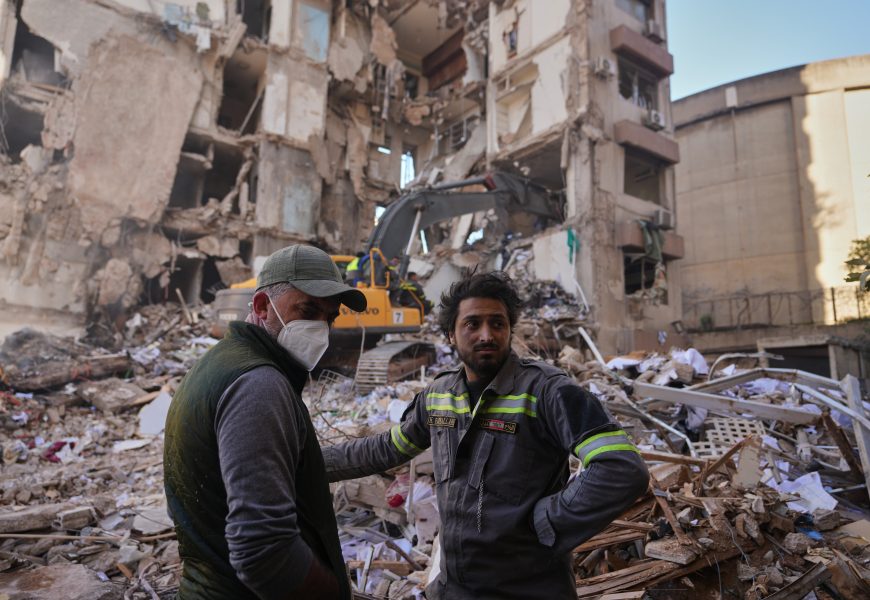
The announcement came after Israel pounded Beirut Wednesday, killing more than 300 people. The negotiations are expected next week in Washington, according to a person familiar with the matter.
Questions remained over what will happen to Iran's stockpile of enriched uranium at the heart of tensions, how and when normal traffic will resume through the Strait of Hormuz, and what happens to Iran's ability to launch future missile attacks and support armed proxies in the region.
Talks between the United States and Iran on a resolution to the conflict are expected to start Saturday in Islamabad, with the White House saying Vice President JD Vance would lead the U.S. delegation.
Here is the latest:
The Athens-based Marine Traffic said on Friday that only 14 vessels, half of which were laden, have crossed the Strait of Hormuz since a ceasefire was declared on April 8, according to a statement on X.
Vessels exiting the Persian Gulf accounted for 70% of all crossings.
"Sanctioned or shadow-fleet-linked vessels accounted for nearly two-thirds of all crossings," added the statement.
Before the conflict, over 100 ships passed through the strait each day - many carrying oil to Asia.
Pakistan's Prime Minister Shehbaz Sharif on Friday received a phone call from British Prime Minister Keir Starmer, who praised Pakistan's diplomatic efforts in facilitating a U.S.-Iran ceasefire and hosting peace talks in Islamabad.
A statement from Sharif's office said both leaders stressed the importance of ensuring the ceasefire holds and of creating conditions for lasting peace and stability in the region.
Spanish Prime Minister Pedro Sánchez on Friday once again called for the European Union to scuttle its association agreement with Israel over its military actions in the Middle East, which he said violate international law.
"It's clear that it is trampling on and violating many of the articles of that association agreement, especially those related to respect for international law and humanitarian law," Sánchez said at the European Pulse Forum in Barcelona. "Let us not allow a new Gaza in Lebanon," he said.
Sánchez's remarks came after Israel expelled Spain from a U.S.-led group that manages humanitarian aid to Gaza, though he did not directly address the decision.
Israel's Foreign Minister Gideon Saar on X wrote that he had briefed U.S. officials on the decision to expel Spain beforehand, due to the country's "obsessive anti-Israel bias under Sánchez's leadership."
The president offered his assessment in a Truth Social post as Vice President JD Vance is flying to Islamabad for talks that aimed at finding a permanent end to the conflict.
"The Iranians don't seem to realize they have no cards, other than a short term extortion of the World by using International Waterways," Trump posted. "The only reason they are alive today is to negotiate!"
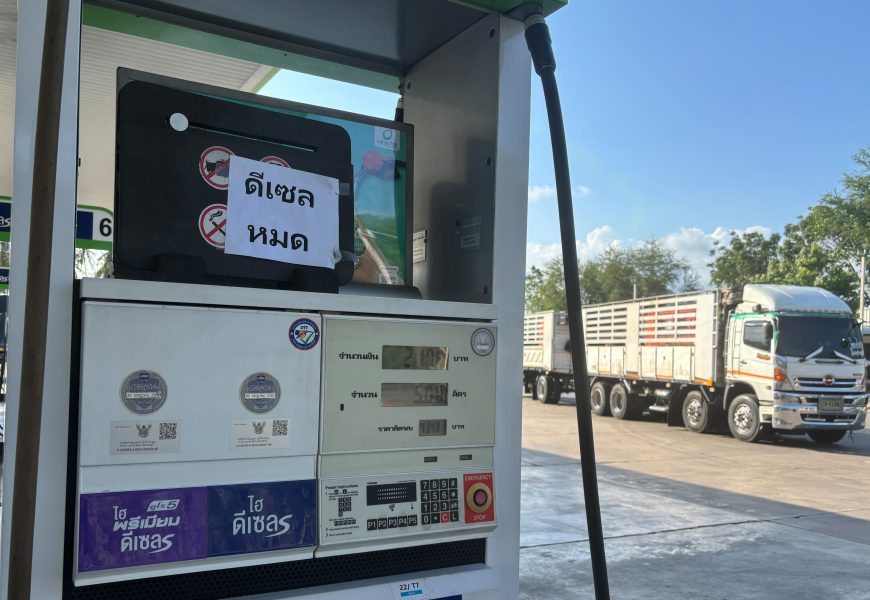
To be certain, Iran's effective shuttering of the waterway, which about 20% of the world's oil normally flows through, has had major impact on the U.S. and global economy.
In the United States, consumer prices rose 3.3% in March from a year earlier, the Labor Department reported Friday The largest monthly jump in gas prices in six decades spurred the sharp spike in inflation.
Abbas Araghchi stressed in a call Friday with Tehran's incoming ambassador to Beirut the need to halt Israeli attacks on Lebanon and called on Washington "to adhere to its commitments in this regard," according to a post on Araghchi's Telegram channel.
Lebanon had declared Iran's ambassador, Mohammad Reza Sheibani, persona non grata and ordered him to leave.
Israeli Prime Minister Benjamin Netanyahu has instructed his cabinet to begin direct negotiations with Lebanon, but said a ceasefire there is not on the table.
Israeli strikes continued Friday, hitting multiple areas across southern Lebanon.
Mohammad Bagher Qalibaf claimed in a social media post Friday that two of the mutually agreed-upon points between the parties have yet to be implemented: a ceasefire in Lebanon and the release of blocked Iranian assets ahead of the negotiations.
"These two matters must be fulfilled before negotiations begin," he wrote. He did not elaborate.
Iran has not yet said who it will send to the ceasefire talks in Pakistan that are expected to start Saturday.
"We remain cautious, and our hands remain on the trigger because we do not trust them," Ambassador Mir Massoud Hosseinian told The Associated Press on Friday.
He blamed the U.S. and Israel for reported ceasefire violations in the Iran war and said Iran is prepared to defend itself should there not be a satisfactory outcome in the next two weeks.
He said Iran has been caught in "a vicious cycle" of negotiations, war, ceasefire and another war for years, adding: "We want to break this cycle."
Hosseinian also said the administration of the Strait of Hormuz after the war "will inevitably differ from before."
He added that Iran's right to enrich uranium is "not negotiable," although the level of enrichment is, framing his country's nuclear program as a necessary part of its future energy security.
Kuwait's army said Friday it had engaged with seven Iranian drones over the last 24 hours. In a statement on the social platform X, it said the attacks targeted vital facilities affiliated with the National Guard.
The post did not mention the number of injuries, adding only that they were in stable condition.
The attacks resulted in "significant material damage," the military said.
Kuwait earlier had said it faced a drone attack Thursday night that it blamed on Iran and its militia allies in the region.
Iran's IRGC denied launching an assault.
It was initially seen as an unexpected mediator, but this week Pakistan has established itself as a key player in bringing Iran and the United States to the negotiating table. Now, it is awaiting representatives from both countries to meet in Islamabad, as the world watches to see whether the talks could lead to an end to the war.
Since Washington and Tehran agreed to an initial 14-day ceasefire on Tuesday, Pakistan's Prime Minister Shehbaz Sharif, Foreign Minister Ishaq Dar and the powerful army chief Field Marshal Asim Munir have been sharing messages about conversations with world leaders, highlighting their role as mediators.
Islamabad isn't often called on to act as an intermediary in high-stakes diplomacy, but it's stepped into the role this time for a number of reasons, both because it has relatively good ties with both Washington and Tehran and because it has a lot at stake in seeing the war resolved.
Commandos, police and other security personnel set up barricades as dusk fell along routes linking the airport to the city, particularly those expected to be used by U.S. and Iranian delegations arriving for high-stakes talks.
During their stay in Pakistan, the two delegations will also meet with Prime Minister Shehbaz Sharif.
The delegations arriving in Islamabad are scheduled to stay at a hotel where negotiations are expected to take place on Saturday.
Ahead of the talks, Pakistan's Interior Minister Mohsin Naqvi reviewed security arrangements for the delegations.
In a statement, the Interior Ministry said Islamabad's Red Zone would be completely sealed on Saturday, with entry restricted to authorized individuals.
Sirens signaling incoming fire from the militant Hezbollah group sounded in repeated waves across northern Israel on Friday, including in border communities and areas such as Nahariya and Karmiel.
The Israeli military said around 30 projectiles were fired toward the area since morning.
President Donald Trump's search for an off-ramp from the war with Iran is getting bumpy inside his Republican Party.
In the decade since Trump's "America First" movement rose to power by rejecting military intervention, his coalition has rarely been tested the way it is now. Trump's exit efforts - first through threats of annihilation, then with a ceasefire that is proving precarious - are doing little to paper over tensions that have festered since the war began six weeks ago.
Despite the growing criticism, Republican leaders in Congress were largely silent. Many were privately uncomfortable with Trump's threats on social media and were concerned about how the war would play out, especially in an election year.
But with Congress on recess for the opening two weeks of April, House Speaker Mike Johnson, R-La., and Senate Majority Leader John Thune, R-S.D., have offered little public reaction to Trump's moves.
Israeli Prime Minister Benjamin Netanyahu said Friday that the Spanish government will be cast out of a U.S.-led coordination center in charge of maintaining peace in Gaza, citing Spain's alleged anti-Israeli bias amid the war with Iran.
"Israel will not remain silent in the face of those who attack us. Spain has defamed our heroes, the soldiers of the IDF, the soldiers of the most moral army in the world," he said in a video statement.
The Kiryat Gat-based Civil-Military Coordination Center was established in October 2025 as a multinational body charged with monitoring implementation of the peace agreement sponsored by Trump in Gaza.
"Those who attack the State of Israel instead of terrorist regimes will not be our partners regarding the future of the region," added Netanyahu.
Spanish Prime Minister Pedro Sánchez has been one of the most outspoken critics of the war on Iran, which he denounced as "illegal, reckless and unjust."
The NNA news agency reported that Israeli warplanes on Friday struck near a State Security agency office in the southern town of Nabatieh, causing extensive damage at the government building. It said others were wounded in the strike and were being transferred to hospitals, without specifying how many.
At least 13 State Security officers were killed, according to a statement from the agency.
There was no immediate comment from the Israeli military on the specific strike. Its Arabic-language spokesperson, Avichay Adraee, claimed that Israel had hit more than 120 Hezbollah militant sites in the past 24 hours.
Hezbollah has claimed a series of air and ground attacks against Israel in the last day after initially holding fire following news of the wider ceasefire deal in the Iran war.
Iranians have welcomed a fragile ceasefire deal after weeks of Israeli and American bombardment, but many fear the war is far from over. For some, there is also a sense of whiplash, after U.S. President Donald Trump threatened to wipe out their civilization hours before he reversed course and agreed to an uneasy truce.
The ceasefire that took effect Wednesday has brought relative quiet to the capital, Tehran, after more than a month of heavy strikes that targeted mainly government and security buildings but also destroyed many homes.
"Everyone I've spoken with, it's given them a new life," a university student told The Associated Press in an audio note via WhatsApp, speaking on condition of anonymity over fears for his safety.
AP spoke to half a dozen residents, despite an ongoing nationwide internet shutdown imposed during mass protests before the war.
Japan said it is deeply concerned about escalating Israeli attacks on Lebanon, urging all parties to immediately stop hostilities and comply with international law.
Foreign Minister Toshimitsu Motegi, in a statement Friday, expressed Japan's "serious concern" over Israel's ground operation against the Lebanese militant group Hezbollah, calling for respect for Lebanese sovereignty and territorial integrity.
Boarding Air Force Two on his way to Pakistan, the vice president said, "We're looking forward to the negotiation. I think it's gonna be positive. We'll, of course, see."
He cited Trump in saying, "If the Iranians are willing to negotiate in good faith, we're certainly willing to extend the open hand."
But Vance also added, "If they're gonna try and play us, then they're gonna find that the negotiating team is not that receptive."
Vance also said that Trump "gave us some pretty clear guidelines" on how talks should go, but didn't elaborate.
The vice president did not take questions from reporters traveling with him.
In the streets of downtown Jerusalem, some Israelis said they believe peace with Lebanon is not possible before a decisive victory against the Iran-backed Hezbollah militant group.
"I think we should finish with them. After we finished with Hezbollah, we can try and make peace with Lebanon," said Yaniv Matsree.
A little over a month of hiding in shelters has inconvenienced the lives of many Israelis, they said, but has done little to change their views of the war with Hezbollah that has killed more than 1,850 people in Lebanon, according to Lebanon's health ministry.
For some Israelis, their country should press on to evade future threats from the militant group.
"The people of Israel want peace and seek peace, but those who want war will get war, and this war is very justified," said Benhamo Momen, who fled from northern Israel, where the impact of the war is most severe. "Hezbollah will not disarm on their own."
The largest monthly jump in gas prices in six decades caused a sharp spike in inflation in March, creating major challenges for the inflation-fighters at the Federal Reserve and heightening the political challenges of rising costs for the White House.
Consumer prices rose 3.3% in March from a year earlier, the Labor Department said Friday, up sharply from just 2.4% in February. On a monthly basis, prices rose 0.9% in March from February, the largest such increase in nearly four years.
Excluding the volatile food and energy categories, core prices rose 2.6% in March from a year earlier, up from 2.5% in February. But last month, core prices rose a modest 0.2%, suggesting the gas price shock hasn't yet spread to many other categories.
The gas price shock stemming from the Iran war has shifted inflation's trajectory from a slow, gradual decline to a sharp increase, further away from the Fed's 2% target. As a result, the central bank will almost certainly postpone any cut in interest rates for months.
Gas prices are also a highly visible cost that has outsize impacts on consumer confidence and political sentiment.
Vice President JD Vance is warning Tehran not to "play" the U.S. as he departs for Islamabad for negotiations aimed at ending the war with Iran.
President Donald Trump has tasked the member of his inner circle who has seemed to be the most reluctant defender of the conflict with Iran to now find a resolution to the war that began six weeks ago and stave off the U.S. president's astonishing threat to wipe out its "whole civilization."
Vance, who has long been skeptical of foreign military interventions and outspoken about the prospect of sending troops into open-ended conflicts, sets off Friday to lead mediated talks with Iran in the Pakistani capital of Islamabad.
It comes as a tenuous, temporary ceasefire appears to be on the precipice of collapsing. The chasm between Iran's public demands and those from the U.S. and its partner Israel seems irreconcilable.
And in the U.S., where Vance might ask voters in two years to make him the next president, there is growing political and economic pressure to wrap it up.
In the first official statement from the militant group since Israel announced it would enter into direct negotiations with Lebanon, Hezbollah chief Naim Kassem said, "We call on (Lebanese) officials to stop offering free concessions," but did not take a clear stance on the prospect of talks.
Kassem praised the performance of Hezbollah fighters battling Israeli forces in southern Lebanon and said Israel had been unable to make significant advances.
"We will not accept a return to the previous situation," Kassem said, an apparent reference to the 15 months before the outbreak of the latest Israel-Hezbollah war, when a ceasefire was nominally in place but the Israeli military continued to carry out near-daily strikes in Lebanon that it said aimed to stop Hezbollah from regrouping.
U.K. Prime Minister Keir Starmer told broadcaster ITV in an interview recorded Thursday that he's "fed up with the fact that families across the country see their bills go up and down on energy, businesses' bills go up and down on energy because of the actions of Putin or Trump across the world."
Starmer's point was that Britain needs energy independence. But mentioning the Russian and U.S. presidents in the same breath is a departure for the prime minister, who usually avoids direct criticism of U.S. President Donald Trump.
The Iran war has soured relations between the two leaders, with Trump lashing out over Starmer's reluctance to join the conflict.
British Prime Minister Keir Starmer says reopening the Strait of Hormuz is vital to strengthening a "fragile" ceasefire in the U.S.-Israeli war on Iran.
Speaking Friday as he left Qatar after a three-day visit to the Gulf, Starmer said leaders in the region were adamant that "there can't be tolling or restrictions" on commercial shipping through the waterway, which has effectively been shut by Iran.
Starmer said he told U.S. President Donald Trump in a call on Thursday that ending the conflict "has to involve" Iran's Gulf neighbors, who "have very strong views on the Strait of Hormuz." Britain is involved with other countries in military planning to ensure security in the strait, if the ceasefire turns into a longer peace.
The World Food Program said that 874,000 people in Lebanon were already facing "acute food insecurity" before the latest escalation. Despite the risks, the WFP is continuing to send humanitarian convoys to southern Lebanon to villages on the border with Israel, which have been subject to heavy bombing, the agency said in a statement.
It says it has provided emergency food and assistance to over 440,000 people since March 2.
More Top Stories