
 °C
 4
Min
Serbia is facing growing international criticism over the treatment of convicted Bosnian Serb war commander Ratko Mladic, after his body was transported from the Netherlands to Belgrade aboard a Serbian government aircraft. The decision prompted EU Enlargement Commissioner Marta Kos to cancel a planned visit to Serbia.
Serbia Faces International Backlash Over Mladic Honour
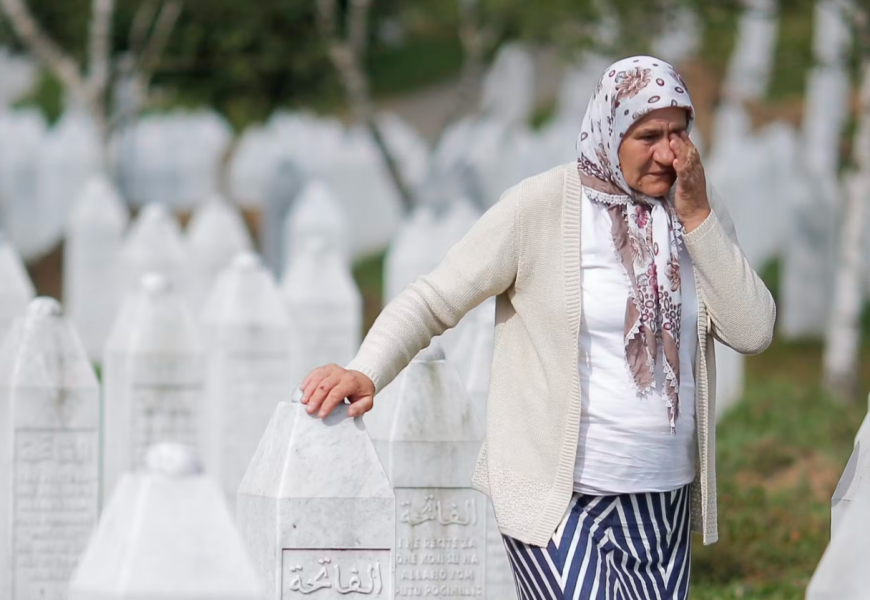
Serbia is facing growing international criticism over the treatment of convicted Bosnian Serb war commander Ratko Mladic, after his body was transported from the Netherlands to Belgrade aboard a Serbian government aircraft.
The decision prompted EU Enlargement Commissioner Marta Kos to cancel a planned visit to Serbia, saying the public glorification surrounding Mladic's death was incompatible with the values expected of a country seeking European Union membership.
Mladic died on August 27 at the age of 84 while serving a life sentence at a UN detention facility in The Hague for genocide, crimes against humanity and war crimes.
His remains were transferred to Serbian authorities on September 3 at Rotterdam The Hague Airport. Serbian soldiers carried his coffin, which was covered with the Serbian flag, from the government aircraft after it arrived in Belgrade.
Kos said the circumstances surrounding Mladic's return demonstrated that Serbia's EU accession process involved more than technical reforms.
"The glorification surrounding his death is incompatible with the values on which the EU path is built," Kos said in a post on X.
She added that Serbia's European future required confronting its wartime past, genuine reconciliation and respect for victims of war crimes.
Kos had been scheduled to visit Serbia on September 9 and 10 as part of a routine trip, including an appearance at an event organised by Slovakia-based think tank GLOBSEC.
Earlier, she warned that the Serbian authorities' handling of Mladic's funeral would be an important test for Belgrade's commitment to European values.
"It's not only about the technical part, what they are doing in the accession process," Kos said in Dublin. "It is about how they align with our values."
Serbian Justice Minister Nenad Vujic travelled on the aircraft carrying Mladic's remains, accompanied by members of Mladic's family and other relatives.
Mladic commanded the Bosnian Serb army during the 1992-95 Bosnian war and became one of the conflict's most notorious figures. His forces captured large areas of Bosnia and Herzegovina, imposed a siege on Sarajevo that lasted more than three years and were responsible for widespread attacks against civilians.
His troops also carried out the 1995 Srebrenica massacre, in which more than 8,000 Bosniak men and boys were killed.
In 2017, the UN-backed International Criminal Tribunal for the former Yugoslavia convicted Mladic of genocide, crimes against humanity and violations of the laws and customs of war.
Responding to criticism over his return, Vujic said Serbia would ensure that the funeral proceeded "peacefully and with dignity".
Questions Over State Funeral
Uncertainty remains over whether Mladic will receive a state funeral or formal state honours.
Vujic had previously indicated that Mladic could be buried with the highest state honours, although he later said he respected the wishes of the former military commander's family.
Mladic's son, Darko, said his father would be buried at Topcider cemetery in Belgrade. He appealed to supporters to use public transport and urged them to ensure the funeral remained peaceful and dignified and free of provocations.
The prospect of official honours has drawn condemnation from politicians in the United States and Europe.
US Representative Joe Wilson, a Republican from South Carolina, said the idea of Serbian President Aleksandar Vucic honouring Mladic was unacceptable, comparing it to Germany giving state honours to Adolf Hitler.
Ireland's Europe Minister Thomas Byrne, whose country currently holds the EU presidency, said on September 4 that a state funeral for Mladic would be unacceptable.
Byrne also warned against senior Serbian government officials taking part in any memorial ceremony for the convicted war criminal.
He said the region needed to "bury the past" while continuing efforts toward reconciliation, but stressed that events surrounding Mladic's funeral continued to cause pain among communities in the Balkans and elsewhere in Europe.
Council of Europe Commissioner for Human Rights Michael O'Flaherty also condemned what he described as the public glorification of Mladic.
He called on authorities to prevent the glorification of convicted war criminals and to uphold their obligations to protect victims' rights, ensure accountability and preserve the principles of justice.
The controversy comes as Serbia continues its long-running bid to join the European Union, placing renewed attention on its handling of the legacy of the Balkan wars and its relationship with victims and survivors of the conflict.
More Top Stories