
 °C
°C
 5
Min
5
Min
Despite severe fuel shortages across Russia, President Vladimir Putin appears unbothered by Ukraine’s increasing attacks on his country’s oil refineries.
Putin shrugs off fuel shortages in Russia as he ramps up attacks on Ukraine
Despite severe fuel shortages across Russia, President Vladimir Putin appears unbothered by Ukraine's increasing attacks on his country's oil refineries.
He has shrugged off the setback for one of the world's leading oil-producing nations as "not critical," dismissed ceasefire proposals and insisted the war will continue until his goals are met.
Putin has described the attacks on Russian energy as an effort by Ukraine to distract attention from its losses on the battlefield, although analysts say the advance of Russian forces has been stymied in recent months. The Russian leader appears to believe his government can keep the fuel crisis from eroding his authority and support for the war he launched more than four years ago.
The Russian military unleashed a massive 11-hour barrage on the Ukrainian capital overnight into Thursday morning that killed at least 30 people. It was one of the deadliest attacks on Kyiv since the start of Russia's full-scale invasion.
Here's a deeper look at the latest exchange of strikes and Putin's refusal to halt the fighting:
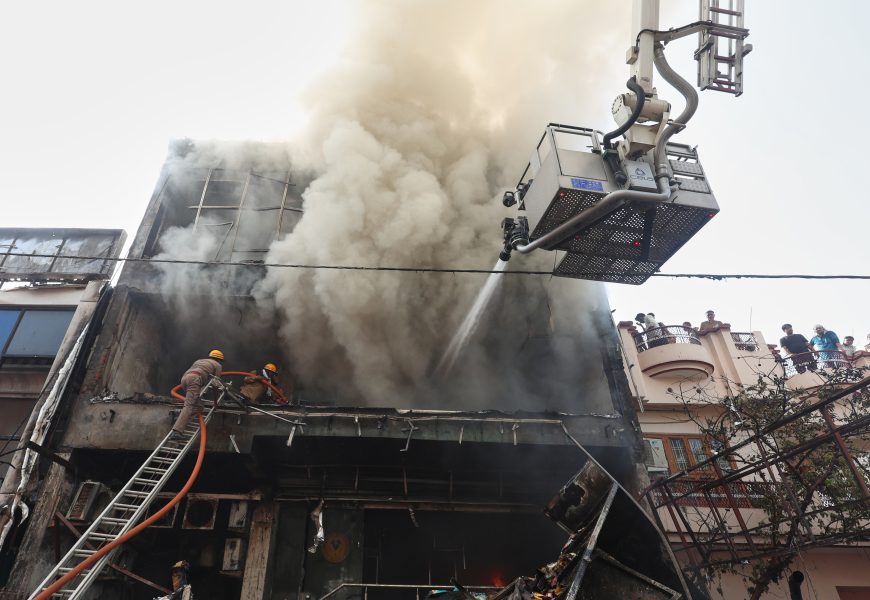
There have been more than 50 reported Ukrainian attacks on oil refineries and other energy facilities in Russia and occupied Crimea since March - a barrage Ukrainian leaders have said is intended to pressure Moscow to end the war.
At the very least, the attacks have brought the war home even more poignantly for millions of Russians, shattering Putin's narrative of the conflict as something that doesn't affect the lives of ordinary people in his country.
An estimated one-third of Russia's refining capacity has been cut off, according to Chris Weafer, CEO of the consultancy Macro-Advisory. The attacks have inflicted lasting damage that will be costly to fix.
Despite significant air defenses protecting Russia's capital, a top refinery in Moscow has been hit twice. The second strike on June 18 set it ablaze, damaging key equipment that will reportedly take until the end of the year to repair.
With gasoline production in Russia reduced by roughly 17% to 850,000 barrels a day, according to government statistics, rationing has been introduced in many regions, and motorists have had to wait in line for hours to refuel.
In an effort to ease the fuel deficit, the government has allowed production of lower quality gasoline with higher sulfur content through the year's end.
Crimea, which Russia illegally annexed from Ukraine in 2014, has faced the worst fuel shortages. Gasoline sales to individuals have been periodically halted there altogether.
Putin chaired a meeting of government officials last weekend to discuss the fuel shortages.
In televised statements, he acknowledged the country was going through a "difficult period." He pledged to accelerate repairs of energy facilities and said Russia would consider importing gasoline to help make up for what he described as "temporary" shortages. He also said Russia's arms industry will boost production of air defense systems to fend off future Ukrainian attacks.
Putin portrayed the Ukrainian strikes as an attempt to divide Russian society, halt Moscow's offensive and try to force the Kremlin into negotiations on "terms advantageous to our adversary."
"We will not give them that chance," he said.
While Putin said Ukraine's long-range strikes on Russian oil facilities "have absolutely no effect on the situation at the front," Western military analysts say mid-range strikes on the Russian army in recent months have hampered military logistics and slowed the tempo of its advance, leaving the battlefield in a stalemate.
Putin claims Russian forces are still advancing across the roughly 1,000 kilometer-long (620 mile-long) front line. In an interview last weekend with state TV, Putin mentioned the names of small villages and even streets in Ukraine.
The Russian president has responded to Ukrainian President Volodymyr Zelenskyy's offer to meet by challenging him to come to Moscow, a non-starter to Ukraine.
Putin has rejected a truce that Kyiv and its Western allies have proposed. He says it would only give Ukrainian forces time to rest and regroup.
He has made any ceasefire conditional on Ukraine's withdrawal from the part of the Donetsk region it still controls, a demand rejected by Ukraine. Putin has said that a final peace deal must oblige Ukraine to abandon its bid to join NATO, reduce its military and protect Russian language and culture.
In last Sunday's interview, Putin claimed that Ukraine had offered to limit the fighting to the four regions that Russia annexed but never fully captured: Donetsk, Luhansk, Kherson and Zaporizhzhia. He said he rejected the proposal because it would free up Ukrainian forces from other areas where Russian troops have made inroads and let them focus on fending off the Russian attacks in the four southeastern regions.
"Faced with a catastrophic shortage of personnel, the armed forces of Ukraine apparently believe this could be their salvation," Putin said. "Saving the Kyiv regime is not part of our plans."
The Kremlin said the offer was made via confidential channels; Ukrainian officials have not publicly discussed any such proposal.
Putin also dismissed a Ukrainian proposal to mutually halt strikes deep into each other's territory. Russian attacks deep into Ukraine are "much more powerful, sensitive and, frankly speaking, destructive," he said.
In Thursday's deadly barrage on Kyiv, Russia once again hit residential areas even as it claimed to be targeting military sites. By contrast, the vast majority of Ukrainian strikes in Russia have hit oil facilities, weapons factories and other military targets.
A United Nations tally says more than 16,000 Ukrainian civilians have died in the war.
Zelenskyy on Friday again urged Ukraine's allies to provide interceptors to counter Russia's ballistic missiles. "Day and night, the Russians strike ordinary civilian infrastructure, and terror is the only argument they have left for continuing the war," he said.
More Top Stories