
 °C
 6
Min
North Korea is moving closer to opening two major road bridges linking the country with Russia and China, as Pyongyang deepens its economic and strategic relationships with both neighbours. Satellite imagery indicates rapid progress on a new bridge across the Tumen River connecting North Korea's northeastern city of Rason with Russia's Khasan.
North Korea's New Bridges Strengthen Ties With China and Russia
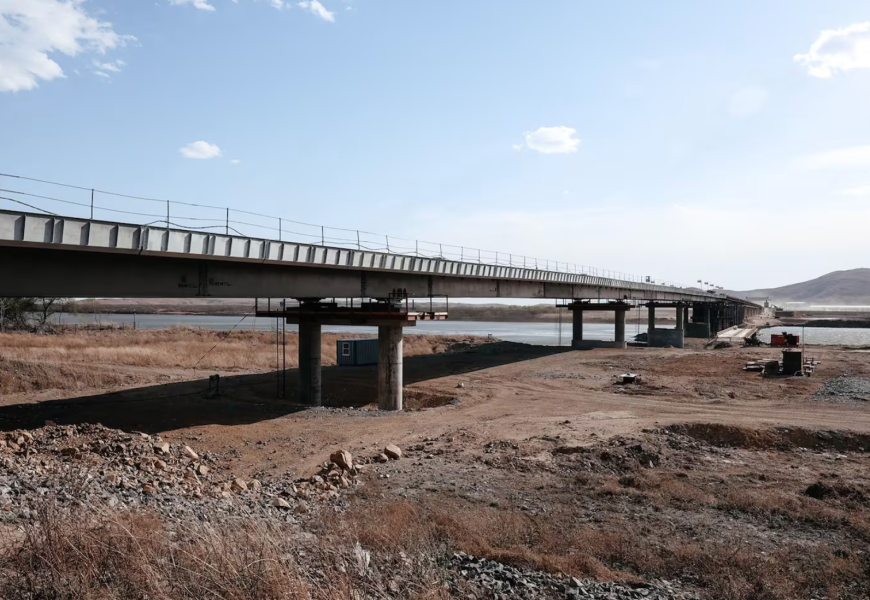
North Korea is moving closer to opening two major road bridges linking the country with Russia and China, as Pyongyang deepens its economic and strategic relationships with both neighbours.
Satellite imagery indicates rapid progress on a new bridge across the Tumen River connecting North Korea's northeastern city of Rason with Russia's Khasan. At the same time, construction has accelerated on the long-delayed New Yalu River Bridge between the North Korean city of Sinuiju and China's Dandong.
Analysts say the projects could significantly expand North Korea's economic and logistical options while strengthening its position amid growing cooperation between Pyongyang, Moscow and Beijing.
Im Eul-chul, a professor at Kyungnam University's Institute for Far Eastern Studies in Seoul, said the bridges would give North Korea greater access to the economic and logistical resources of both China and Russia.
He said the development could also send a message to Washington that Pyongyang has fewer incentives to make major concessions, including over its nuclear programme, in exchange for economic benefits from the United States.
Experts believe the new transport links could also make it easier for China and Russia to help North Korea circumvent international sanctions designed to restrict the resources and revenue available to its weapons programmes.
Rapid construction
Progress on both bridges has accelerated sharply in recent months, particularly during August.
At the Tumen River crossing, the main road leading from the bridge to the Russian border checkpoint has been paved, while parking and inspection areas for cargo trucks are nearing completion.
Bruce Songhak Chung, a senior researcher at the Korea Institute for Security Strategy in Seoul, said construction on immigration, inspection and administrative facilities also appeared to be close to completion.
Roofs and exterior work were largely finished, while interior equipment and customs systems were believed to be undergoing installation, Chung said.
Joung Eunlee, director of the Korea Institute for National Unification, visited the Chinese city of Hunchun in mid-August and observed construction activity from across the border.
She said heavy machinery and large numbers of workers were visible on the Russian side and suggested the bridge could open as early as September, potentially before the end of the year.
Meanwhile, significant progress has also been reported on the North Korean side of the New Yalu River Bridge.
The bridge itself was completed about 12 years ago but has never opened because China and North Korea failed to resolve disagreements over financing and the infrastructure needed to connect it to their respective road networks.
Satellite imagery from August 30 showed that paving on the access road and customs compound was almost complete. A new entrance gate has also been installed, while exterior work on customs buildings appeared close to completion.
Im said North Korea may be seeking to open both crossings around the same time, creating land routes to both China and Russia and allowing Pyongyang to maximise the economic benefits of its relationships with the two powers.
He said China and Russia also had strong incentives to complete the infrastructure as their strategic relationships with North Korea grow increasingly important.
Economic and military interests
The Tumen River bridge was designed to accommodate up to 300 vehicles and 2,850 people each day.
It was originally scheduled to open on June 19, but delays on the Russian side pushed back the launch.
Ivan Stepanov, head of Russia's Khasan district administration, said in July that the bridge was already operationally ready and that authorities expected it to open in early September.
The location could also give China an indirect economic interest in the crossing. The borders of China, Russia and North Korea meet in the surrounding area, while China's Hunchun Border Economic Cooperation Zone is located close to Rason and Khasan.
Analysts say the new route could increase commercial trucking between the countries and reduce transport costs for Russian and North Korean businesses.
The bridge could also facilitate the movement of military equipment and personnel between Russia and North Korea, although such activity would raise further concerns over international sanctions and the countries' expanding military cooperation.
Ri Jong Ho, a former senior North Korean official who defected to South Korea, said Pyongyang could potentially use the crossing to receive Russian military supplies and other equipment.
He argued that a land route could provide another way to move personnel and weapons into North Korea while attracting less international scrutiny than some maritime or rail shipments.
The New Yalu River Bridge would serve a different but equally important purpose for China.
According to Im, the crossing could increase Beijing's economic influence over North Korea while strengthening the role of Dandong as a major regional logistics centre.
Ri suggested that China's concern over the rapid progress of the Tumen River project may have contributed to the renewed push to complete the Yalu crossing.
He said Chinese President Xi Jinping may have encouraged North Korean leader Kim Jong Un to move ahead with the project as ties between Pyongyang and Moscow have strengthened.
However, analysts cautioned that completing customs facilities does not necessarily guarantee that the bridge will immediately begin operating.
A growing geopolitical triangle
The bridges could ultimately have significance beyond trade and transport.
Analysts say Pyongyang may use improved access to both China and Russia to encourage competition between its two powerful neighbours, allowing North Korea to extract greater economic and strategic benefits from each relationship.
If both bridges open this year, they could also accelerate economic, military and diplomatic cooperation among North Korea, China and Russia.
Im described the infrastructure projects as a potential symbol of an emerging continental partnership between the three countries and a sign of North Korea's changing diplomatic position.
The development would represent a sharp contrast with the failed 2019 summit between Kim Jong Un and then-US President Donald Trump in Hanoi, where efforts to reach an agreement on North Korea's nuclear programme broke down.
Joung said the completion of the bridges could strengthen Pyongyang's position in any future negotiations with Washington.
By establishing stronger physical links with China and Russia, North Korea could enter future talks with greater economic alternatives and potentially increased strategic leverage in Northeast Asia.
More Top Stories