
 °C
°C
 4
Min
4
Min
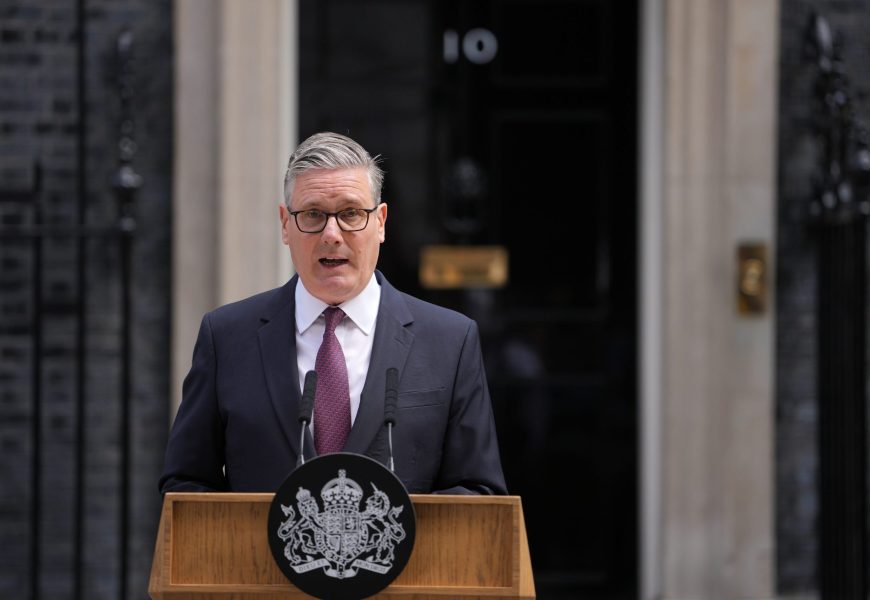
LONDON (AP) – British Prime Minister Keir Starmer conceded Monday that he had lost the support of his rank-and-file Labor Party members in Parliament and that he will step down once his successor as party leader is chosen, possibly as soon as the middle of July.
How Keir Starmer will be replaced as UK prime minister and will anyone stand against Burnham?

LONDON (AP) - British Prime Minister Keir Starmer conceded Monday that he had lost the support of his rank-and-file Labor Party members in Parliament and that he will step down once his successor as party leader is chosen, possibly as soon as the middle of July.
Andy Burnham, the former mayor of Greater Manchester whose resounding victory in a special U.K. election last week set in motion Starmer's resignation, has confirmed he will put himself forward to be his successor.
Burnham is seen as the front-runner to replace Starmer, especially after his decisive victory Thursday in the seat of Makerfield in northwest England, showing that he could appeal to voters across the political spectrum.
Despite Labour's dismal poll ratings and substantial losses in local elections in May, Burnham defied electoral gravity. He was able to see off the challenge from the anti-immigration Reform UK candidate and mop up votes from other left-leaning political parties. He substantially increased Labour's share of the vote to nearly 55%, which, if repeated on a similar scale across the country in the next general election, would no doubt see the party remain in power.
Though Starmer did not mention Burnham by name in his resignation statement outside the prime minister's residence at 10 Downing Street, he conceded "with good grace" that he wasn't best placed to lead Labour into that election.
The next national election doesn't have to be held until 2029, but British politics allows parties to change leaders midterm without a general election.
Here's how events could unfold over the coming weeks:
Burnham, 56, arrived in London on Monday and was sworn in as a member of Parliament after nearly a decade away, during which he was the popular mayor of Greater Manchester.
Shortly after Starmer's statement, Burnham said he would run for Labour leader.
He said Starmer's decision to step down "marks the beginning of a transition and it is important that this process is conducted in an orderly and responsible way."
"The country expects stability, seriousness and a continued focus on the issues that matter most and that is what it will get," Burnham said.
Starmer said he would stay in post as prime minister until his successor is in place and that Labour's national executive committee will open nominations on July 9.
Should Burnham be the only candidate, then he could be confirmed as party leader a week or so later. However, if there is a contest, then the election would likely drag on into September.
Burnham has won the support of Wes Streeting, who quit as health secretary last month and had previously indicated he would throw his hat in the ring. Streeting said he would back Burnham for the Labour leadership, saying "he can win the fight of our lives against the forces of nationalism," a reference to the anti-immigration Reform UK party, led by Nigel Farage, that has overtaken Labour in the opinion polls since the July 2024 general election.
"We could spend the summer exaggerating small differences, or we can roll up our sleeves and help him to deliver the change our party and our country needs," he said.
Other potential candidates have yet to comment on Starmer's announcement. They include Starmer's former deputy, Angela Rayner, who resigned last September over an unpaid property tax, and Al Carns, who quit last week as the armed forces minister over Starmer's funding plans for national defense.
There are many in Labour's ranks who say it would be best if no one stood against Burnham so he could enter 10 Downing Street this summer before the party conference. Burnham was tight-lipped on whether he'd prefer a coronation rather than a contest when heading for his train south to London from Manchester.
To join the contest, candidates must win the support of a fifth, or 81, of the party's House of Commons lawmakers.
Those candidates who reach that threshold of support would then have to receive the backing of 5% of local constituency parties, or at least three party affiliates - groups such as trade unions and cooperative societies.
Eligible members of the party and affiliates would then vote for the leader using an electoral system that ranks the candidates. The winner is the first candidate to secure more than 50% of the vote.
King Charles III would then invite the winner to become prime minister and form a government.
More Top Stories