
 °C
 6
Min
Fresh allegations of Chinese encroachment along India's northeastern frontier have triggered a political storm in New Delhi and raised concerns about a possible setback in efforts to improve relations between the two Asian powers.
China-India Border Tensions Rise Over New Encroachment Claims
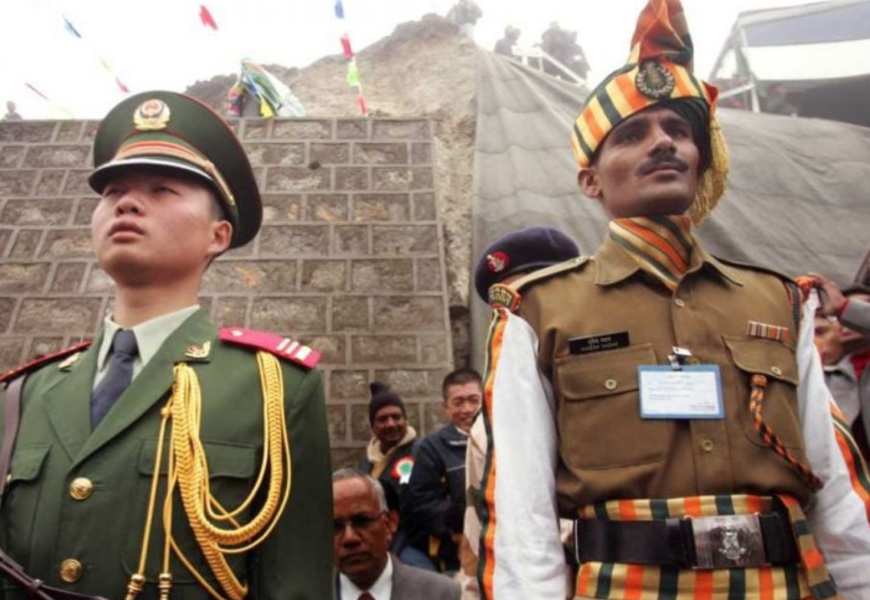
Fresh allegations of Chinese encroachment along India's northeastern frontier have triggered a political storm in New Delhi and raised concerns about a possible setback in efforts to improve relations between the two Asian powers.
A fact-finding team from the People's Party of Arunachal Pradesh (PPA), a regional party aligned with Prime Minister Narendra Modi's Bharatiya Janata Party-led political bloc, has alleged that Chinese forces have expanded their presence in parts of Arunachal Pradesh and that Indian troops have been unable to access some patrol points.
The claims centre on the remote Upper Subansiri district, where difficult terrain and extreme weather have long complicated India's ability to maintain a continuous presence along the disputed frontier.
The allegations have drawn criticism from India's opposition, which has accused the Modi government of failing to adequately address reports of Chinese activity along the border.
The developments come at a sensitive time for relations between India and China. The two countries have sought to ease tensions following several years of military confrontations, while US President Donald Trump's trade policies have placed pressure on both New Delhi and Beijing.
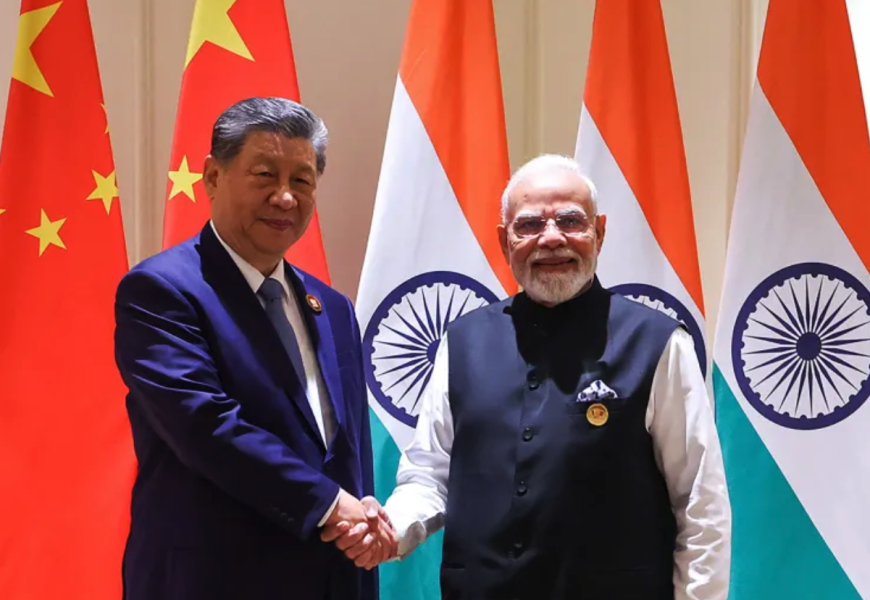
Chinese President Xi Jinping is also expected to travel to India for the BRICS summit, scheduled to be hosted by New Delhi on September 12-13.
What are the latest allegations?
The PPA sent a four-member team to the Taksing area of Upper Subansiri after reports emerged of alleged Chinese encroachment.
According to PPA Vice President Kaling Jerang, the team found that Indian security forces face major difficulties patrolling the region between April and October because of heavy rain, flash floods and landslides.
The report claimed Chinese forces, by contrast, maintain activity in the area throughout the year.
The findings have raised questions about whether India's infrastructure and logistical arrangements along the frontier are sufficient to maintain a sustained military presence.
The team also reported claims from local residents that Indian troops abandoned Shera 5, a border patrol point, following a confrontation with China's People's Liberation Army (PLA) in 2023.
Jerang said residents were increasingly concerned about losing access to traditional hunting grounds and other ancestral territory.
He argued that the alleged encroachments were not recent developments but had expanded gradually over several years.
A local tribal organisation, the Nah Welfare Society, separately warned government officials last month that Chinese encroachment had increased significantly, alleging an effort to occupy more territory.
What do India and China say?
The Indian army has rejected reports of Chinese encroachment, describing media reports on the issue as inaccurate and without basis.
India's Foreign Ministry has taken a more measured position.
Foreign Ministry spokesperson Randhir Jaiswal said New Delhi had repeatedly made clear to Beijing that border issues remained extremely serious and that maintaining peace and stability along the frontier was a priority.
He also warned that conditions along the border would have an impact on the broader relationship between India and China.
Beijing has also avoided directly confirming or rejecting the latest allegations.
Chinese Foreign Ministry spokesperson Guo Jiakun said the border situation was currently "generally stable" and noted that the two countries had recently held their 36th meeting on border affairs.
According to Guo, both sides agreed to maintain diplomatic and military communication while working to preserve peace and stability along the frontier.
Why is the border so disputed?
India and China share a 3,488km frontier stretching across some of the most remote and mountainous parts of Asia.
Much of the boundary remains disputed, and the two countries have never reached agreement on the precise location of the Line of Actual Control (LAC), the de facto boundary separating areas controlled by the two sides.
The dispute has historical roots dating back to British rule in India.
In 1914, British India and Tibet agreed to the Simla Convention, which established the McMahon Line. India regards the line as its legitimate border with China, while Beijing rejects the agreement, arguing that China was not a party to the negotiations.
China claims the whole of Arunachal Pradesh, referring to the region as "South Tibet" or "Zangnan". Beijing also controls Aksai Chin, a disputed area claimed by India and Pakistan.
The unresolved boundary has repeatedly resulted in military confrontations.
In June 2020, Indian and Chinese troops fought in the Galwan Valley in Ladakh, resulting in the deaths of at least 20 Indian soldiers and four Chinese troops.
Tensions have also occurred at Naku La in Sikkim, while disputes remain in areas including Barahoti in Uttarakhand and Shipki La in Himachal Pradesh.
In 2017, Indian and Chinese forces were involved in a 73-day standoff at Doklam, a strategically important plateau near the borders of India, China and Bhutan.
Experts warn that even a relatively small incident could potentially trigger a much wider confrontation.
BR Deepak, a professor of Chinese studies at Jawaharlal Nehru University, said differences over the location of the LAC meant that patrols from either side could enter territory claimed by the other.
Praveen Donthi, a senior analyst at the International Crisis Group, described the current relationship as one of cautious engagement following years of border tensions.
He said China could use the unresolved boundary dispute to exert pressure on India and create uncertainty over whether actions by local military commanders reflected broader policy from Beijing.
Can better trade overcome the border dispute?
Despite the continuing strategic rivalry, economic ties between India and China have expanded considerably.
According to the Indian Embassy in Beijing, two-way goods trade reached $151.1bn during the 2025-26 financial year, more than double the $71.45bn recorded in 2016-17.
However, the trade relationship is heavily tilted towards China.
Indian imports from China increased from $61.28bn in 2016-17 to $131.63bn in 2025-26, while Indian exports rose from $10.17bn to $19.47bn.
The economic relationship has also become more complicated amid growing US-China tensions and Washington's efforts to prevent Chinese goods from circumventing American tariffs and sanctions.
India and China have nevertheless continued to pursue greater diplomatic and economic engagement.
Analysts say this reflects the complicated nature of their relationship: the two countries have strong economic incentives to cooperate while remaining strategic competitors with an unresolved territorial dispute.
Saheli Chattaraj, an assistant professor specialising in China-India relations at Somaiya Vidyavihar University in Mumbai, said improved economic and diplomatic ties did not necessarily mean that the fundamental border dispute had been resolved.
She described the relationship as one of "managed competition" rather than genuine normalisation.
Donthi similarly argued that India and China were likely to remain competitors for the foreseeable future.
With no permanent settlement of their disputed boundary in sight, the border issue is expected to remain one of the biggest obstacles to a lasting improvement in relations between the two countries.
More Top Stories