
 °C
 3
Min
Canadian Prime Minister Mark Carney says Ottawa remains prepared to reach a new trade agreement with the United States, provided any deal delivers meaningful benefits to both countries and is built on stability and credibility. Carney said Canada was ready to return to negotiations whenever Washington was prepared to do so.
Canada Ready for US Trade Deal That Benefits Both, Carney Says
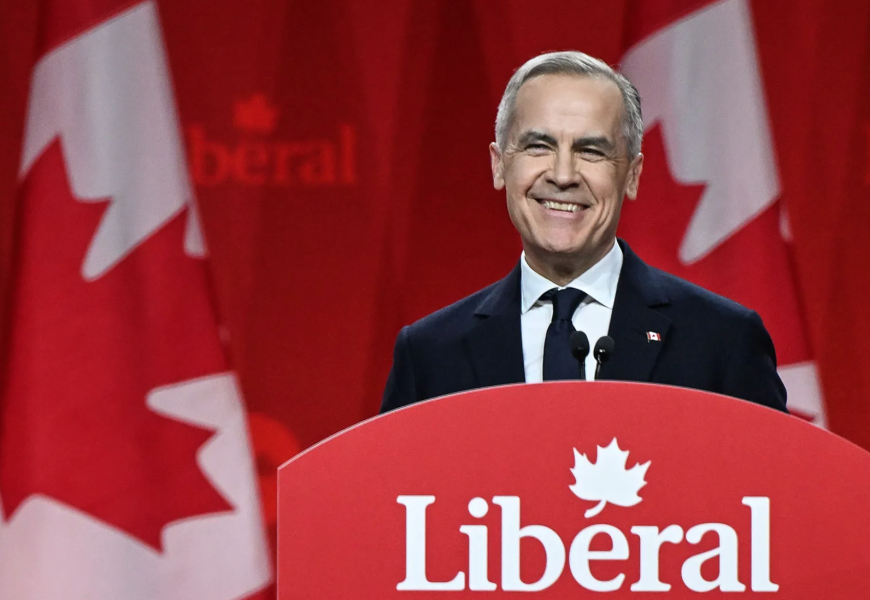
Canadian Prime Minister Mark Carney says Ottawa remains prepared to reach a new trade agreement with the United States, provided any deal delivers meaningful benefits to both countries and is built on stability and credibility.
Speaking to reporters in Thunder Bay, Ontario, on Thursday, Carney said Canada was ready to return to negotiations whenever Washington was prepared to do so.
He argued that an agreement serving the interests of Canadian workers, families and businesses would also benefit American consumers, companies and households.
"We're ready to sit down and strike that deal when the Americans are ready," Carney said.
His comments come after trade negotiations between Canada and the US broke down last month following weeks of increasingly difficult discussions. Since then, Washington has imposed 50 percent tariffs on about $20 billion worth of Canadian goods, while Canada has prepared retaliatory tariffs on a similar value of US products, due to take effect next week.
The Trump administration has also threatened to impose 50 percent tariffs on Canadian automobiles and auto parts from January 1, adding further pressure to the two countries' already strained trading relationship.
Carney also rejected suggestions from US Commerce Secretary Howard Lutnick and Treasury Secretary Scott Bessent that Canada had abandoned negotiations because of domestic political considerations.
Responding to the claims, Carney questioned whether unelected US cabinet officials were in a position to assess Canadian political dynamics.
The Canadian prime minister also suggested that Washington's position on some previously contentious issues had recently become less rigid, potentially creating an opportunity for negotiations to resume.
Carney said US negotiators had maintained an "our way or the highway" approach during the final stages of last month's talks, particularly over issues involving Canadian language and culture.
He said the apparent change in Washington's position was welcome.
"If they didn't care, they shouldn't have kept them in the deal," Carney said.
However, shortly after Carney's remarks, US President Donald Trump criticised Canadian politicians in a post on Truth Social.
Trump accused Canadian politicians, including Carney, of portraying him as an enemy and warned that such an approach could have severe consequences for Canada's economy.
Canada Looks Beyond US Market
The United States remains Canada's most important trading partner, but Ottawa has been working to reduce its reliance on the American market since Trump introduced a series of tariffs last year.
Statistics Canada data released on Thursday showed that the US accounted for 66.35 percent of Canada's total exports in July, down from 69.39 percent in June and 72.64 percent a year earlier.
Canada's reliance on the US for imports has also declined, although at a slower pace. The US represented about 59 percent of Canada's imports over the past 12 months, compared with 62 percent in 2024.
Carney's government is increasingly seeking to strengthen domestic production and expand Canada's economic links with other international markets.
On Thursday, the prime minister announced a C$4.7 billion ($3.4 billion) investment to build and maintain more than 300 passenger rail cars for Via Rail in Canada.
The project will use manufacturing facilities in Quebec and Thunder Bay and represents another effort to shift procurement away from US suppliers.
The announcement underscores Ottawa's broader strategy of strengthening domestic industry while reducing the country's vulnerability to disruptions in its crucial but increasingly contentious economic relationship with Washington.
More Top Stories