
 °C
 5
Min
New Delhi and Dhaka had been quietly preparing for Bangladesh Prime Minister Tarique Rahman's first visit to India since taking office earlier this year. Those plans were thrown into uncertainty after former Bangladeshi leader Sheikh Hasina delivered a political speech from the Indian capital.
Bangladesh-India reset stalls over Hasina dispute
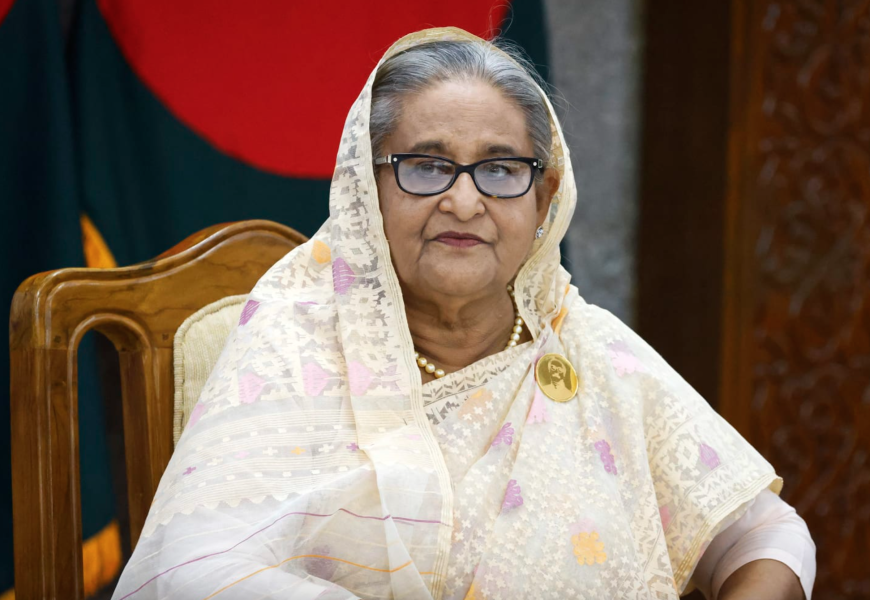
New Delhi and Dhaka had been quietly preparing for Bangladesh Prime Minister Tarique Rahman's first visit to India since taking office earlier this year. Those plans were thrown into uncertainty after former Bangladeshi leader Sheikh Hasina delivered a political speech from the Indian capital.
Hasina. who has lived in exile in India since being removed from power in August 2024, addressed a news conference by video on August 5. Her son and senior members of her Awami League party also used the event to criticise the mass uprising that led to her downfall.
Dhaka responded angrily, saying it was "outraged" that Hasina had been allowed to engage in political activity from Indian soil. Bangladesh had previously warned New Delhi against permitting activities that could harm bilateral relations.
Bangladesh subsequently said a "propitious environment" was needed before Rahman's proposed visit could go ahead. It also called on India to act on extradition requests involving Hasina and other Bangladeshis accused of crimes.
India has said the extradition requests remain "under examination" through established procedures.
However, interviews with Bangladeshi officials and analysts indicate the dispute may be more complicated than a straightforward disagreement over extradition.
The immediate issue may be less about when India hands Hasina over and more about what she is allowed to do politically while she remains in India.
The dispute over Hasina's political activities
Faisal Mahmud, a former press minister at the Bangladesh High Commission in New Delhi, said Hasina's extradition and her political activities should be treated as separate matters.
He said the current stalemate was largely the result of India allowing Hasina to continue making political statements from Indian territory despite Bangladesh's repeated requests that such activities be prevented.
Mahmud described extradition as a considerably more complicated and lengthy legal process, arguing that the Rahman government understood it could not be resolved quickly.
"At this point, the impasse over Tarique's proposed visit to India, and over any broader reset of the frosty bilateral relationship, is not centred on Hasina's extradition," Mahmud said. "It is centred on India allowing her to conduct political activities from its soil."
Dhaka's concerns about Hasina's activities in India predate Rahman's government.
During a meeting with Indian Prime Minister Narendra Modi on April 4, 2025, Muhammad Yunus, who was then leading Bangladesh's interim administration, asked New Delhi to stop Hasina from making what he described as "incendiary statements" from Indian soil.
Humaiun Kobir, deputy head of Bangladesh's Ministry of Foreign Affairs, said Dhaka wanted a stable relationship with India based on trust and mutual respect.
But he said Bangladesh could not accept what he described as Hasina's attempts to destabilise the country from India.
Kobir said relations could enter "a new phase" if both governments recognised the political changes that followed the 2024 uprising.
"No one can conduct any terror activity from a sovereign land," Kobir said. "It is unacceptable that the terrorists who killed our people are allowed to talk from their land and incite violence in Bangladesh."
He also called on India to return other Bangladeshis accused of crimes, including suspects wanted over the killing of Sharif Osman Hadi, a prominent critic of Hasina and India who was killed in 2025. The alleged killers were later arrested in India after crossing the border.
Despite the dispute, Kobir indicated that Bangladesh did not want the Hasina issue to permanently prevent high-level contact between the two governments.
Discussions over Rahman's proposed visit are continuing, he said, arguing that a meeting between the two leaders would eventually be necessary.
The uncertainty was highlighted when India's Rashtrapati Bhavan issued a notice over the weekend that appeared to indicate preparations for Rahman's visit, before withdrawing it several hours later.
"A meeting is a must," Kobir said, while stressing that it would take place only when Bangladesh considered it to be in the national interest.
He said the meeting could happen within weeks or several months, depending on circumstances.
Extradition remains a difficult question
The distinction between restricting Hasina's political activities and extraditing her is significant because the two issues present very different legal and diplomatic challenges for India.
Hasina was sentenced to death in absentia by Bangladesh's International Crimes Tribunal after being convicted of crimes against humanity in connection with the deadly crackdown on the 2024 uprising. She has rejected the proceedings, describing them as politically motivated.
Bangladesh formally requested Hasina's extradition on December 23, 2024, through a diplomatic note submitted under the countries' 2013 extradition treaty.
Following her death sentence in November 2025, Dhaka renewed its demand. India subsequently said the request was being examined.
On August 11, India's Ministry of External Affairs said the extradition request remained under consideration through the country's established procedures. It said New Delhi would provide an update when there was further progress.
Pinak Ranjan Chakravarty, a former Indian high commissioner to Bangladesh, said the request would have to be assessed under the extradition treaty and India's legal framework.
"All legal formalities have to be completed for obtaining a judicial order for extradition," Chakravarty said.
He added that the treaty contained provisions allowing India to reject an extradition request under certain circumstances.
The disagreement over Hasina therefore presents both governments with a delicate diplomatic challenge. Bangladesh wants India to prevent the former leader from using its territory as a platform for political activity and is seeking the return of wanted suspects.
India, meanwhile, must weigh those demands against its legal obligations, domestic procedures and broader strategic interests in its relationship with its eastern neighbour.
For now, the path towards a Bangladesh-India reset remains uncertain. A meeting between Rahman and Modi could help reopen dialogue, but Dhaka's insistence that India address Hasina's activities means the former prime minister remains central to efforts to repair relations.
More Top Stories